

If your water treatment project has passed clash detection and something still feels off, you're probably right. The issues that show up as rework on these jobs: unreachable valves, blocked confined-space entries, sequencing conflicts. No clash report flags them. Here's how teams are using water treatment BIM reviews in VR to catch them while design can still change.
TLDR:
- Clash detection misses the problems that cause field rework: unreachable valves, blocked confined-space entries, and sequencing conflicts that a clean model will never flag.
- Water and wastewater projects combine civil, structural, process, and electrical disciplines in congested spaces where a few millimeters of error in gravity drainage cascades across the whole system.
- VR reviews on water projects work best after federation and initial clash resolution, before submittals lock, when changes are still cheap.
- Superintendents, operations staff, owner facilities teams, and trade partners catch what BIM-only reviews miss, but only if they can engage the model without needing a specialist to drive.
- Resolve has supported Carollo Engineers, Nashville Water, and Anglian Water on water capital projects, with issue annotations syncing directly to ACC, Procore, or Revizto.
Why Water and Wastewater Projects Demand Rigorous BIM Coordination
Water and wastewater treatment facilities are not typical builds. Dense piping networks run above and below grade, gravity-fed systems require exacting slope tolerances where a few millimeters of error cause drainage failures, and confined mechanical spaces leave almost no room for field corrections. Regulatory requirements are strict, permit timelines are unforgiving, and many facilities must stay partially active throughout construction.
The American Society of Civil Engineers gave U.S. drinking water infrastructure a C- grade in its 2025 Infrastructure Report Card, with wastewater receiving a D+. Aging systems are being rebuilt under public funding pressure, which means schedule overruns and rework carry real political and financial consequences.
Standard 2D plan reviews were not designed for this level of complexity, which is why teams rely on clash detection in construction to catch conflicts earlier.
The Design Complexity That Makes Coordination Harder
Water treatment plants combine civil, structural, mechanical, electrical, and process disciplines in ways that rarely appear together on a single project. Unlike buildings where MEP runs through defined ceiling plenums, treatment facilities route piping across open-air structures, through buried wet wells, and between process tanks that shift in size and position as design evolves.
Gravity-fed drainage networks are especially unforgiving. Pipe slopes must be precise enough to prevent both sediment buildup and drainage failures, and those tolerances cascade across the entire system when any upstream element moves. Chemical dosing lines, aeration equipment, SCADA conduit, and secondary containment all compete for the same congested corridors, demanding a tight MEP coordination process. Federated, the combined model often contains conflicts no single discipline team would catch working in isolation.
How BIM Is Applied Across the Water Treatment Project Lifecycle
BIM enters water projects early, during schematic design, when engineers use it to resolve site constraints and process flow layouts before civil and structural work is locked. As design progresses, trade partners pick up discipline models and redraft them around actual manufacturer equipment. That is where coordination complexity spikes.
Pre-construction is where BIM earns the most. Federated models let the GC, specialty contractors, and the owner's operations team review the full facility before a single pipe is ordered. A Dodge Data and Analytics study on BIM for water projects found reduced errors and omissions among the top reported benefits. Post-construction, owners inherit the model for asset management, maintenance planning, and future capital work.
What Clash Detection Misses on Water and Wastewater Projects
Automated clash detection answers one question: does object A physically intersect object B? Passing that check does not make a model ready to build.
Water treatment pipe galleries make this obvious. Valves positioned per code, with no geometric conflicts, can still be unreachable when surrounding pipework, insulation, and structural steel consume every inch of the corridor. A technician cannot turn a handwheel from a ladder they cannot position. That failure passes clash detection without issue.

Confined-space entry is another gap. Wet wells and below-grade vaults have strict OSHA requirements for access, egress, and working clearance. A manway that is code-sized on paper can still be impassable when adjacent equipment is installed, and no clash report will flag it.
Sequencing conflicts are equally invisible to automation. A clash-free federated model reflects a single point in time. It says nothing about whether a pump skid can be rigged into position before the overhead structure closes, or whether a large chemical storage tank can be set before surrounding secondary containment walls are poured.
These are the issues that surface in the field as RFIs, rework, and schedule slips. A clash-free model is a coordination milestone. It is not a field-ready one.
| Issue Type | Caught by Clash Detection? | Caught in VR Review? |
|---|---|---|
| Geometric intersections between objects | Yes | Yes |
| Unreachable valves in congested pipe galleries | No | Yes |
| Impassable confined-space entries (wet wells, vaults) | No | Yes |
| Rigging and pump skid sequencing conflicts | No | Yes |
| Insufficient maintenance clearances after insulation and handrails | No | Yes |
| OSHA working-clearance gaps at confined-space entries | No | Yes |
BIM Coordination Workflows for Water and Wastewater Teams
Federation is the starting point of any BIM coordination workflow. Civil, structural, process piping, instrumentation, and electrical models come from different authoring teams and must be combined before any meaningful review can happen. Most teams manage that in Navisworks or a CDE like Autodesk ACC, with the GC's VDC coordinator owning the combined file.
Design-intent models from the engineering firm then get handed to trade partners, who redraft them around actual equipment submittals. That handoff resets coordination. A pipe routed at design intent may conflict with real pump skid dimensions, and the full clash and clearance review cycle starts over.
Issue tracking needs to stay connected to the model. Annotations from review should sync back to the project's issue log in ACC, Procore, or Revizto so nothing lives only in a screenshot or email thread. When issues resolve and the model updates, the next review cycle starts from a clean baseline.
Immersive VR Reviews in Water and Wastewater BIM Coordination
Walking a treatment plant model at human scale surfaces a different class of problem. A chemical dosing room that passes clash detection can still leave an operator with no safe path to a metering pump. A filter gallery can be code-compliant on paper and physically impassable once insulation, pipe supports, and handrails are all in place. These conditions only register at full scale. That spatial experience is the basis for VR collaboration for construction teams.
Hensel Phelps documented exactly this pattern on water infrastructure rehabilitation work, using immersive visualization to plan and coordinate in congested underground conditions before crews entered the site.
VR reviews on water projects typically happen after federation and initial clash resolution, before submittals are finalized. That window matters: design is detailed enough to review realistically, but changes are still cheap. The outputs are concrete: a logged issue list synced to the project's coordination tool, annotated directly in the model at the location where the problem lives.
Who Should Be in the Review Room
The value of a VR review scales with who is in it. A BIM coordinator can move through the model, but they cannot tell you whether a confined-space entry point gives maintenance crews enough working clearance, or whether a pump skid can be reached safely after surrounding pipework is installed. That knowledge lives with different people.
There are four stakeholder groups that consistently catch what BIM-only reviews miss:
- Superintendents and foremen catch constructability gaps: rigging paths, sequencing conflicts, and access routes that look fine in plan but fail at scale. These are the findings teams surface when they run a constructability review in VR.
- Operations and maintenance staff identify what they will need to service after handover, including valve reach, instrument access, and egress from wet wells.
- Owner facilities teams validate clearances against their own maintenance standards before the design is locked.
- Trade partners installing process piping and electrical flag conflicts with actual equipment dimensions that design-intent models do not capture.
Getting these stakeholders into a 2D review rarely works. A flat screen with a BIM specialist driving the mouse is a passive experience for anyone without model training. Walking the space independently changes the outcome. A foreman who can move through a filter gallery at their own pace finds problems a guided tour would skip.
The coordination process already has the right people on the project. The question is whether they can engage with the model meaningfully before decisions are locked.
Multi-User Collaboration Across Devices
Headsets are one entry point, not the only one. During a Resolve session, a VDC coordinator can walk the federated model from inside a Meta Quest while the plant owner's operations manager follows from a browser, a trade partner joins on iPad from a remote office, and a superintendent watches from the job trailer. Everyone sees the same model through a federated BIM model viewer. Nobody needs training or a software download to join.
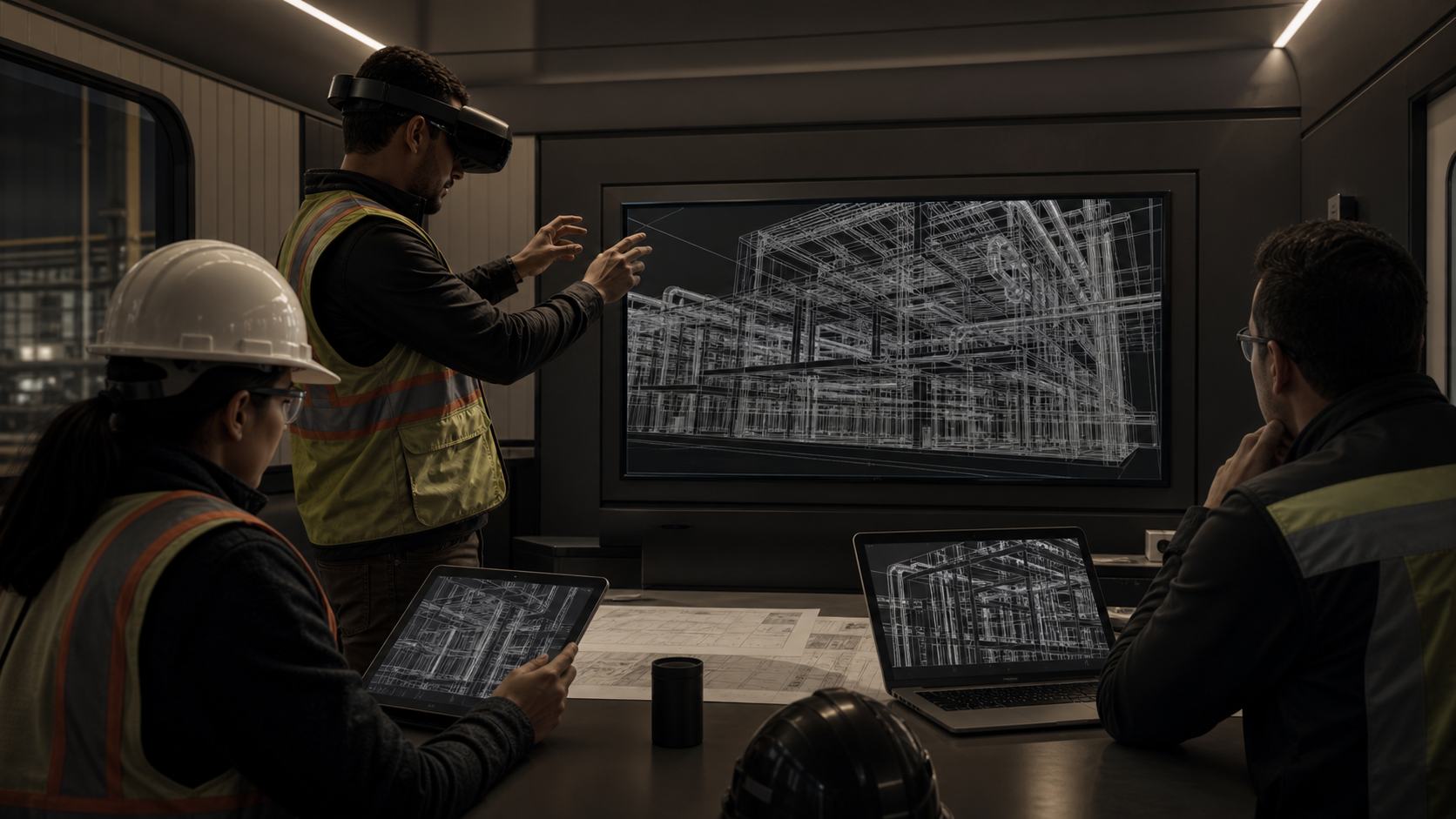
For water projects with civil, process, mechanical, and electrical disciplines spread across multiple firms and locations, this matters. Getting the right people into a 2D coordination meeting is already hard. The web viewer removes the headset barrier: share a link, and the stakeholder is in the model.
Annotations created during the session sync directly to the project's issue log in ACC, Procore, or Revizto. A markup placed in VR at the location of an inaccessible valve appears in the same issue workflow the GC's coordinator checks the next morning. Findings stay attached to the exact location where the problem was found, not buried in a screenshot folder or a follow-up email.
Integrating VR Reviews With Existing BIM Workflows
VR reviews only hold coordination value when they feed back into the tools the team already works from. A separate issue list in a separate tool is just more overhead.
Resolve connects directly to Autodesk Construction Cloud, BIM 360, and Procore for model linking. Once a model is linked from the CDE, it updates automatically as design progresses. No re-uploading, no manual file management between review cycles. Navisworks NWD files work through direct upload, covering teams federating across disciplines before pushing to a shared environment.
Issue sync is two-way. Annotations placed in VR push to ACC, Procore, or Revizto. Status changes in those tools flow back into Resolve. The coordination team's existing issue log gains field-relevant input without gaining another tool to manage.
For water and wastewater teams running multi-discipline federation across civil, process, and electrical, that connection matters. The VR review becomes one step in the coordination cycle, not a parallel track.
Resolve for Water and Wastewater BIM Reviews
Carollo Engineers scaled VR BIM reviews using Resolve alongside Nashville Water's owner team, with the owner actively marking up the model during collaborative sessions instead of watching a screen share. In the UK, Anglian Water deployed Resolve across its Alliance on a separate programme, covering their full portfolio of infrastructure builds.
The Wellington Engine runs large federated process models on wireless standalone Quest headsets without a PC tether or model downsizing, reflecting the large-project BIM coordination best practices Resolve applies across its portfolio. On water projects, the federated model pulls together civil, structural, process piping, instrumentation, and electrical from separate authoring teams. That combined file can be reviewed at full scale without the performance trade-offs that typically force teams to strip the model before a session.
A VDC coordinator walks the model from inside a headset while the plant owner's operations staff follows on a browser and trade partners join on iPad from separate offices. Annotations placed at an inaccessible valve or a confined-space entry concern sync back to ACC, Procore, or Revizto before the session ends.
Resolve has supported over $50B in construction projects across verticals where early issue detection carries the most weight. Water and wastewater are firmly in that group. MEP density, confined-space constraints, and public funding accountability mean finding problems before submittals are locked directly affects delivery cost.
Final Thoughts on BIM Workflows for Water and Wastewater Treatment Facilities
Water treatment builds are where coordination gaps get expensive fast. Gravity-fed systems, confined spaces, and multi-discipline federation across civil, process, and electrical leave almost no margin for field corrections. Your model already contains the information your team needs. Getting the right people into it before submittals are finalized is what separates a clean delivery from a costly one. Request a demo to see how your team can put that model to work earlier in the coordination cycle.
FAQ
What does VR BIM coordination catch on water treatment projects that clash detection in Navisworks misses?
Clash detection confirms that objects do not physically intersect. It cannot tell you whether a valve is reachable once surrounding pipework and insulation are installed, whether a confined-space entry meets OSHA working clearances with adjacent equipment in place, or whether a pump skid can be rigged in before overhead structure closes. These conditions only register at human scale. On water treatment projects, where pipe galleries are congested and wet wells have strict access requirements, those gaps are where field RFIs and rework originate. A clash-free model is a coordination milestone; it is not the same as a build-ready one.
What's the best way to get operations and maintenance staff into a water plant BIM review before submittals are locked?
Give them an entry point that requires no software download, no model training, and no BIM experience. In Resolve, a plant owner's operations team joins through a browser link while the VDC coordinator walks through the model in a headset and trade partners follow on iPad from remote offices. Everyone sees the same federated model at the same time. That setup is built for wastewater BIM coordination because the people who know maintenance clearances, valve reach, and confined-space egress are rarely BIM specialists. The web viewer removes the barrier that keeps them out of the coordination process.
How do VR construction reviews fit into an existing water treatment BIM workflow without adding a separate issue log?
VR reviews hold coordination value only when findings feed back into the tools the project team already works from. Resolve links directly to Autodesk Construction Cloud, BIM 360, and Procore for model sync. Annotations placed during a session push to the project's issue log in ACC, Procore, or Revizto. Status changes in those tools flow back into Resolve. The model updates automatically as design progresses, so each review cycle starts from a current baseline, not a manually re-exported file.
When in the water treatment project lifecycle should a VR BIM review happen?
The highest-value window is after federation and initial clash resolution, before submittals are finalized. At that point, the model is detailed enough to review against actual equipment dimensions, and design changes are still inexpensive. Reviews done after submittals lock reduce your options. On water and wastewater treatment projects, that pre-submittal window is also when gravity-fed drainage tolerances, confined-space configurations, and chemical dosing room layouts are still adjustable across disciplines.
Can large federated water treatment plant models run on a wireless VR headset without a PC tether?
Yes. Resolve's Wellington Engine runs full federated process models, including combined civil, structural, process piping, instrumentation, and electrical files, on standalone Meta Quest headsets with no PC connection required. This matters for vr construction water plant reviews because the combined model for a treatment facility pulls from multiple authoring teams across disciplines. Tools that require model downsizing or a tethered workstation force teams to strip geometry before a session, which removes the detail that field-relevant stakeholders need to review clearances, access routes, and sequencing.
It's time to build in months, not years.