

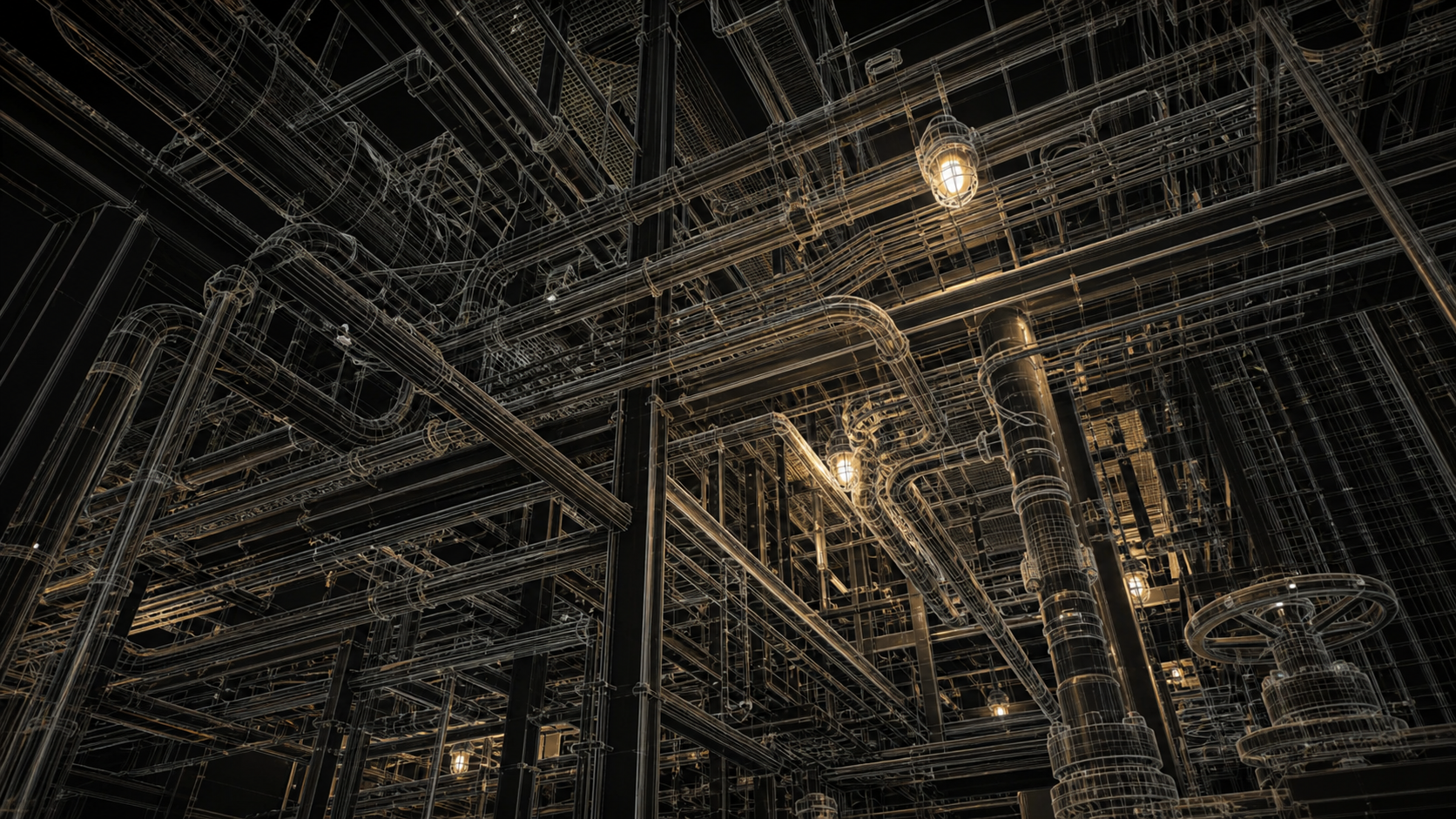
If your coordination review ends when clash detection runs clean, you're leaving a lot of risk on the table. On a refinery or power plant, the issues that drive the biggest rework tend to have no geometric conflict at all: equipment a technician cannot reach, sequences that fall apart during erection, access routes that disappear once neighboring systems are installed. Getting field expertise into the model before construction locks those decisions in is where energy projects stay on budget.
TLDR:
- Turnaround windows are measured in hours of lost production; access and sequencing decisions must be resolved before the facility goes offline, not inside the outage.
- Brownfield BIM requires two coordination layers: matching as-built conditions against aging drawings, then planning new work within those verified constraints.
- Constructability failures on energy sites pass every automated check. A valve with no geometric conflict can still require dismantling adjacent spools to replace.
- VR review lets operations staff and maintenance leads walk the federated model before fabrication locks, without a BIM specialist driving the screen.
- Resolve lets a process operator review the same model in a browser while a VDC lead moves through the model in a headset, with issues syncing directly to ACC, Procore, or Revizto.
Why Energy Facility Construction Demands More Than Clash Detection
Refineries, compressor stations, and power plants are deeply interconnected systems. A valve repositioned by three inches can block maintenance access to a pressure vessel requiring quarterly inspection. A cable tray routed half a meter lower can conflict with a regulatory clearance requirement that no automated checker flagged.
A 2025 Boston University study found that the average energy infrastructure project costs 40% more than expected, with over 60% of energy projects worldwide running over budget. Clash detection finds geometric conflicts. It cannot tell you whether a technician can physically reach equipment, whether the sequence makes sense, or whether the design will survive a safety audit. Those gaps do not show up in any automated report. On energy sites, they are where the overruns live.
How BIM Is Used Across the Energy Sector
Energy facility BIM carries far more than geometry. An ATEX zone classification, for example, is embedded directly at the object level, traveling with every piece of equipment from design through handover so the boundary stays reviewable at every stage.
In oil and gas refineries, upstream processing facilities, LNG terminals, and power plants, BIM connects structural modeling with process plant design. Piping and instrumentation diagrams feed into 3D models. Equipment vendors supply geometry with embedded specs. Structural steel, civil foundations, and process equipment are coordinated inside a single federated file that can run to hundreds of gigabytes on a complex project, a scale challenge similar to how teams coordinate BIM on data center builds.
The handover model matters here in ways it rarely does in commercial construction. Operations teams inherit a model that functions as the authoritative record for the asset: where every valve sits, what material grade every spool carries, what clearance each piece of equipment requires for inspection.
Bentley Systems handles a large share of engineering-side work, particularly for civil infrastructure, pipelines, and plants. Revit and Navisworks serve the construction coordination layer. Both feed into a review process where non-BIM experts gain access to models, including operations staff, maintenance leads, and safety officers, who need to engage with a model they did not build and were never trained to read.
Greenfield vs. Brownfield Energy Projects: Different BIM Challenges
Greenfield energy projects start with a clean slate. The model precedes the structure, every system can be coordinated before a foundation is poured, and the BIM team controls sequencing from the first column to the final conduit run. The challenge is upfront: with no physical reference, coordination errors caught late carry full rework cost. Rigorous pre-construction review matters because there is nothing on site yet to catch what the model missed.
Brownfield work is a different problem. Existing facilities are often documented in aging 2D drawings that do not reflect decades of field modifications. Confined spaces limit scanner coverage, leaving gaps in point cloud data. Work must happen around live operations, sometimes within outage windows measured in days. A scan that looks complete on screen can hide a pressure line rerouted in 2009 and never entered into the record.
Brownfield BIM requires two layers of coordination: matching what the as-built model says against what is physically there, then planning new work within those constraints. Errors in either layer surface during installation, when the shutdown window is already burning.
Accurate as-built data is the foundation of every brownfield decision. Without it, engineers design against a fiction and field crews find out the truth under time pressure.
Regulatory and Safety Requirements That Shape BIM on Energy Projects
Energy projects carry a regulatory stack that goes well beyond building codes. OSHA's Process Safety Management standard, ATEX and NEC hazardous area classifications, ASME pressure vessel codes, and inspection traceability requirements all impose spatial and documentation constraints that must be designed into the facility before a single weld is made.
BIM earns its value here because the model can carry compliance-relevant data alongside geometry. Hazardous area zone boundaries, equipment inspection clearances, and pressure ratings can be embedded at the object level, making the model a reviewable compliance record. A 2023 study published in MDPI Sustainability identified BIM adoption barriers specific to oil and gas construction risk management, noting the sector's distinct regulatory and safety requirements as drivers of implementation complexity. When safety officers and operations staff can review spatial conditions against those embedded requirements before construction locks in decisions, compliance gaps surface while they are still cheap to fix.
Clash Detection vs. Constructability: What BIM Review Must Cover on Energy Sites
Automated clash detection answers one question: does object A intersect object B? On a refinery or power plant, that question matters. But it covers a fraction of what can go wrong.
The issues that drive rework on energy sites tend to pass every automated check. A control panel sitting six inches from a structural member clears the clash tolerance and still cannot be opened for maintenance. An instrument rack positioned within code-compliant clearances from a pipe bundle leaves no room for a technician to swap a transmitter under process conditions. A maintenance corridor is code-compliant in plan and physically impassable once surrounding systems are installed.
| Clash Detection | Constructability Review |
|---|---|
| Flags geometric intersections between objects | Confirms a technician can physically reach equipment |
| Runs automatically on the federated model | Requires a field expert or operations lead walking the model |
| Clears a control panel six inches from a structural member | Flags that the same panel cannot be opened for maintenance |
| Confirms a valve has no geometric conflict with surrounding pipe | Identifies that adjacent spools must be dismantled to replace it |
| Validates corridor width against code | Checks whether the corridor stays passable once insulation is installed |
| Software-automated | Judgment-dependent: human scale and field knowledge required |
These are constructability failures. Teams that run a constructability review in VR put someone with field knowledge inside the model at human scale to ask whether the design can be built, maintained, and inspected.
Sequencing as a Separate Risk
On high-density energy systems, sequencing compounds the problem. Structural steel, pipe supports, and process equipment often need to go in a precise order. A federated model that passes clash detection may still have irresolvable installation conflicts if two systems cannot occupy the same space at the same time during erection. That judgment belongs to the superintendent or field lead reviewing the model before mobilization, not to a collision algorithm.
A common example: pipe supports for a high-pressure process line are designed to be welded to structural steel before the pipe runs are installed. But the structural steel in that same bay also carries the primary access platform, which crane crews need to reach the equipment pads below. If the access platform goes in first, the welding positions for the pipe supports become physically inaccessible. If it goes in last, the crane cannot reach the equipment pads to set the vessels. No geometric conflict exists between any of these elements. Clash detection clears the model. The installation conflict only surfaces when a superintendent walks the sequence in the model and recognizes that the crew cannot be in two places at once during erection. That review needs to happen before steel is ordered, not after crews are on site.
The line between clash detection and constructability review is the line between what software can automate and what humans must see.
Turnaround Planning and Shutdown Management with BIM
Turnaround events are scheduled. The pressure they carry is not. A refinery taken offline for a planned upgrade generates costs measured in hours. An unplanned extension because a replacement vessel does not fit the existing pipe rack, or because maintenance access was never reviewed before crews mobilized, turns a tight shutdown window into a budget crisis.
BIM reduces that exposure by moving critical decisions upstream. Before the facility goes offline, teams can sequence access routes through congested modules, validate that replacement equipment fits within structural and piping constraints in the current as-built model, and confirm that field crews can physically reach what they need to reach. Operations staff who will own the consequences of a missed clearance can walk the work scope before a wrench is lifted.
Sign-off is faster when the people approving the plan can see what they are approving. A maintenance lead reviewing a pipe replacement inside a federated model at human scale, with surrounding structure and live systems visible, surfaces access conflicts and sequencing gaps in minutes. Those gaps found before the shutdown cost far less than the same gap found inside the outage window.
Scan-to-BIM for Existing Energy Facilities
Brownfield energy projects rarely begin with clean documentation. Drawings from original construction may reflect a design intent that bore little resemblance to what was actually built. Field modifications over decades often went unrecorded, and what exists on paper and what exists on the ground diverge in ways that only become visible when new equipment arrives on site.
Reality capture closes that gap. A survey team walks the facility with a terrestrial scanner, capturing millions of measured points that produce a point cloud of existing conditions. That raw data, once converted to a textured mesh, can be federated alongside new design models in Navisworks and reviewed alongside proposed changes in the same environment.
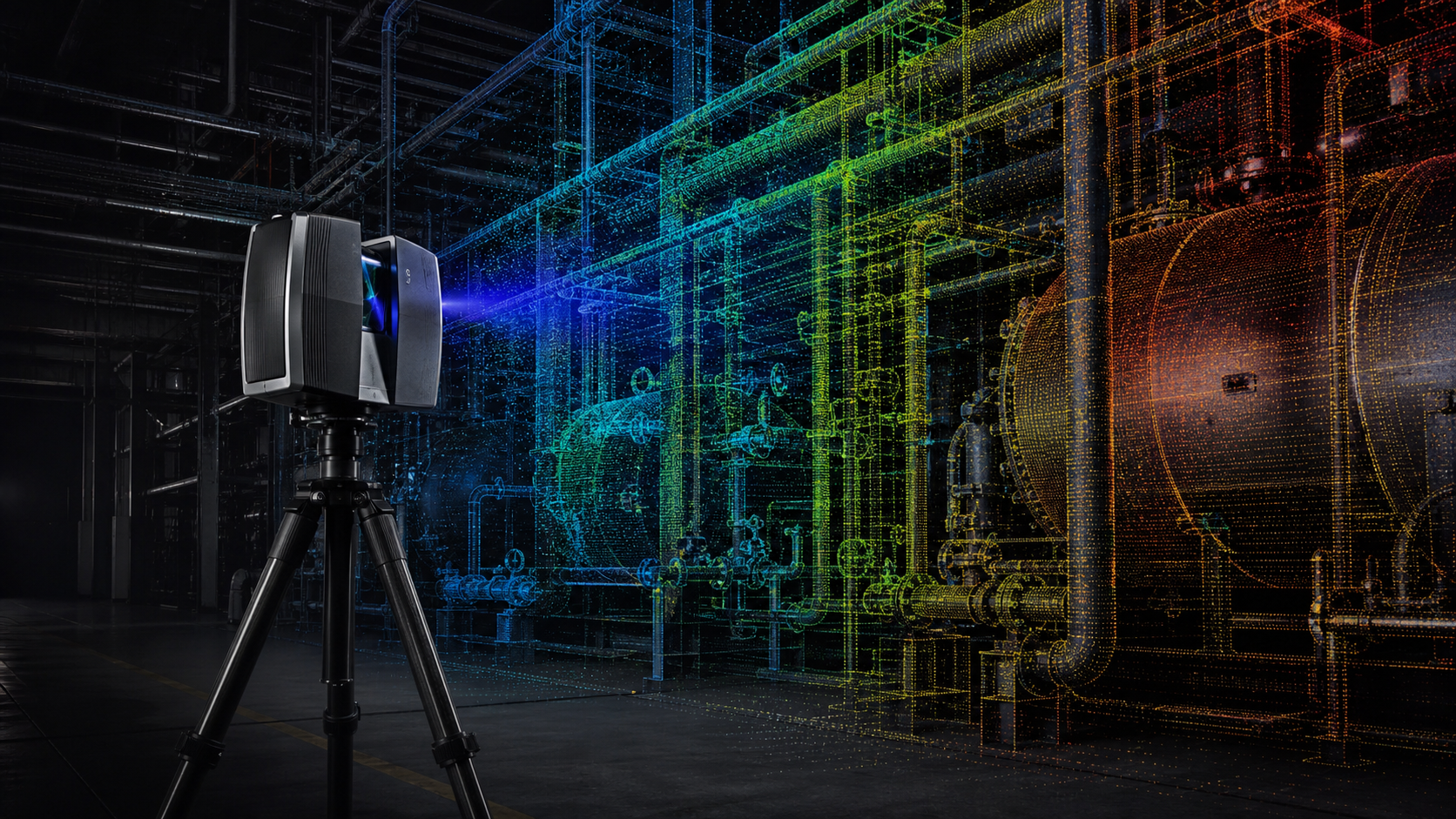
The workflow requires several deliberate steps. Point cloud data must be processed through conversion tools like Autodesk ReCap Pro, Cintoo, or Prevu3D before coordination tools can ingest it. Texture generation cannot be skipped; a mesh exported without texture produces a featureless gray surface that carries no visual reference for distinguishing a pipe rack from a structural column. The mesh exports as an NWC file, gets appended into Navisworks, and the federated result uploads for review.
Known limitations matter on energy sites. Confined process areas, dense pipe racks, and equipment clusters create line-of-sight gaps that leave holes in the scan. Multiple scan positions reduce but rarely eliminate voids, and those voids represent real unknowns the model will not reflect. Isolating the work scope instead of processing an entire plant scan keeps file sizes manageable.
The combined BIM and scan mesh lets reviewers check spatial fit and maintenance clearances against verified existing conditions instead of what 2009 drawings suggest.
Multi-Stakeholder Coordination on Energy Capital Projects
On large capital projects, six or more organizations can contribute to a single federated model before the first piece of structural steel goes up, which is why best practices for large project BIM coordination matter from day one. The EPC contractor federates discipline models from structural, piping, electrical, and instrumentation teams. Equipment vendors supply certified geometry mid-construction. The owner's engineering group monitors against design intent. Operations and maintenance staff are often the last to see anything.
That sequencing is where problems accumulate. By the time operations staff join a review, the model is largely locked. Comments about maintenance access become RFIs, which generate change orders that arrive during installation.
The root cause is access. A maintenance lead or safety officer cannot work through a desktop Navisworks session without a BIM specialist driving the screen, so they either skip the review or sit passively while someone else hunts for problems they are best positioned to find. Giving field teams access to BIM models directly closes that gap.
Web-based viewers that require no download, no license, and no BIM training support VR collaboration between construction teams, letting operations staff join from a browser while the VDC lead moves through the model in VR. Issue tracking that syncs back to ACC, Procore, or Revizto means comments from a maintenance lead go directly into the same log the coordination team works from, not into a side document no one revisits.
Where VR Fits in the Energy BIM Review Process
VR review sits between clash detection and fabrication. After automated tools have run and obvious geometric conflicts are resolved, the model goes to field experts and operations staff who need to confirm the design can be built and maintained. On energy sites, that handoff is where VR pays.
The density of systems in a refinery module or power plant substation creates spatial conditions nearly impossible to read on a screen. Pipes, cable trays, structural members, HVAC ducts, and instrumentation compete for the same volume, the same density that drives MEP coordination with BIM on any complex facility. A plan view shows clearances that look adequate. A VR walkthrough at human scale shows a technician cannot extend an arm past a pipe bundle to reach the isolation valve behind it.
Operations staff are the right people for that review. They know which valves get touched quarterly, which inspection ports require a full body turn, and which access route becomes impassable once surrounding insulation is installed. Getting that expertise into the model before fabrication locks is what prevents expensive discoveries during a turnaround window.
The VDC team runs the federated model through clash detection in Navisworks. Then the same model goes into VR where a process operator, maintenance lead, or safety officer can walk it independently without a BIM specialist driving the view. Comments sync directly to ACC, Procore, or Revizto. The finding surfaces while the design can still change.
Immersive Review on High-Hazard Energy Sites
Energy facilities carry hazards that no clash detection report surfaces. Arc flash from high-voltage switchgear, classified areas with explosion risk, confined spaces requiring permit entry, and process chemical exposure create environments where a wrong assumption during installation can injure or kill.
Physical walkthroughs of live areas require hazard analysis, permitting, and PPE coordination before anyone steps through a door. A VR review of the same space requires none of that. A maintenance lead can walk the evacuation route from a compressor station control room, check whether the path stays clear once surrounding equipment is installed, and flag a blocked egress before construction locks it in permanently, without entering a live process area.
The same logic applies to safety equipment placement. Fire suppression nozzles, gas detection units, eyewash stations, and emergency shutoffs have required clearances that are regulatory, not advisory. A safety officer walking through the federated model can confirm that every emergency access point remains physically reachable once surrounding systems are installed, before a single support is welded.
Confined space planning benefits from the same review. Before sending an entry team into a vessel or pipe chase, supervisors can walk the space virtually, identify pinch points, and verify egress is clear. That pre-entry review does not replace the permit process, but it reduces the chance that a crew runs into a clearance problem after they are already suited up.
The goal is to resolve every question that can be resolved before anyone steps into a hazardous area, so that when site access is necessary, it is purposeful and well-prepared.
Resolve for Oil, Gas, and Power Plant BIM Coordination
Resolve is built for the project type this article has described: facility-scale BIM, dense systems, multi-stakeholder reviews, and high consequences for issues that reach fabrication.
The Wellington Engine loads full-size federated models on wireless Meta Quest headsets without a PC tether. That matters on energy projects where model complexity routinely defeats desktop VR setups. A process operator in a browser and a VDC lead in a headset can review the same model at the same time, with no downloads, no BIM training, and no license required for the browser participant.
Resolve integrates directly with Autodesk ACC, BIM 360, Procore, and Revizto. Issues flagged during a VR walkthrough sync back into the coordination tools the project team already uses.
Resolve has supported over $50B in construction projects and more than 6GW in data center portfolios. The energy sector shares the same coordination demands: complex MEP, high-stakes access requirements, and non-BIM experts whose input shapes whether the design works in the field. Getting that input before fabrication locks is where the value sits.
Final Thoughts on BIM, VR, and Constructability Review on Energy Sites
The gap between a model that passes every automated check and a design your field crews can actually build and maintain is where energy projects lose money. Closing that gap means getting the right people into the model before the shutdown window opens or the fabrication order ships. Your operations staff and maintenance leads are the right people. See how Resolve gets them there.
FAQ
What are good alternatives to Navisworks for construction model review on energy and industrial facilities?
Navisworks answers geometric clash detection well but leaves constructability, sequencing, and maintenance access unreviewed. For energy facility BIM review, teams often pair Navisworks with a dedicated immersive review tool: Revizto adds issue tracking and a cloud layer, while Resolve adds VR walkthroughs where operations staff and superintendents can check spatial conditions clash detection cannot flag. The two approaches cover different risks and work best in sequence.
Can operations and maintenance staff review an energy facility BIM model without BIM training or a Navisworks license?
Yes. Web-based viewers that require no download and no license let maintenance leads, safety officers, and operations staff join a model review from a browser. In Resolve, a process operator can walk the same federated model as the VDC lead in a headset, with no BIM training required, and any issues flagged sync directly to ACC, Procore, or Revizto.
How should VDC teams structure BIM review on brownfield oil and gas turnaround projects?
Start with a laser scan converted to a textured mesh and federated alongside the proposed design in Navisworks. Once the combined model is clean, move to immersive review before the shutdown window opens: operations staff walk replacement equipment fit, maintenance access, and sequencing constraints at human scale while decisions are still flexible. Issues found before mobilization cost a fraction of what the same gaps cost inside a live outage.
What does VR review cover on energy projects that clash detection misses?
Clash detection confirms two objects do not intersect. VR review surfaces whether a technician can physically reach a valve in a congested pipe rack, whether a maintenance corridor stays passable once surrounding insulation is installed, and whether the installation sequence is physically achievable. On refineries and power plants, those are the gaps that generate rework. A model can be clash-free and still contain decisions that will fail in the field.
What construction tech tools integrate with Procore and Autodesk for BIM model review on energy and industrial projects?
Resolve integrates directly with Autodesk ACC, BIM 360, and Procore, syncing models and issues so VR and web reviews feed back into the coordination tools the project team already uses. Revizto also integrates with both platforms and routes serious VR review needs to Resolve. That connection matters on energy capital projects where six or more organizations contribute to a single federated model and issue tracking must stay in one place.
It's time to build in months, not years.