

).png)
Our customers and our team at Resolve spend a lot of time inside Meta Quest headsets. So we’re listening especially close to rumors about the potential release of a new Meta headset.
Meta’s Connect is Sept. 23-24 and promises to showcase the latest breakthroughs in both AI glasses and VR.
Naturally, everyone wants to know if one of those breakthroughs includes a new Meta Quest model and what it might look like.
We’ve rounded up all the rumors we’ve seen from prominent Meta Quest investigators so you know what to look out for at Meta Connect. This new lightweight product would be built for productivity and mixed reality over gaming.
One ground rule first: Everything below is speculation. Meta has confirmed none of it. We read the same information you can, just with a few years of pattern recognition on top of it.
What is Project Phoenix?
Meta’s latest headset has cycled through codenames for a while now. You may have read about Project Phoenix speculation at one point.
Puffin became Loma, then Loma became Phoenix. The latest one making the rounds is Pegasus.
Retailer pages reportedly started showing "Pegasus" on the front while the backend URLs still read "Loma." When a name reaches retailer systems, it usually means the product is close to real.
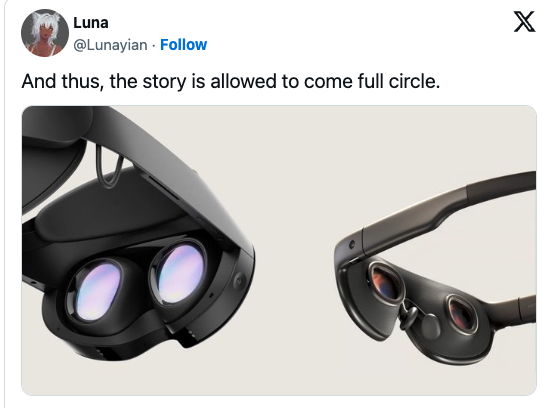
Investigations show a major change in how the Meta headsets look
Here’s the reason this product release gets us excited: a recent video that was embedded in Meta’s publicly released firmware shows a device that rests on your nose bridge, light enough to sit there on its own.
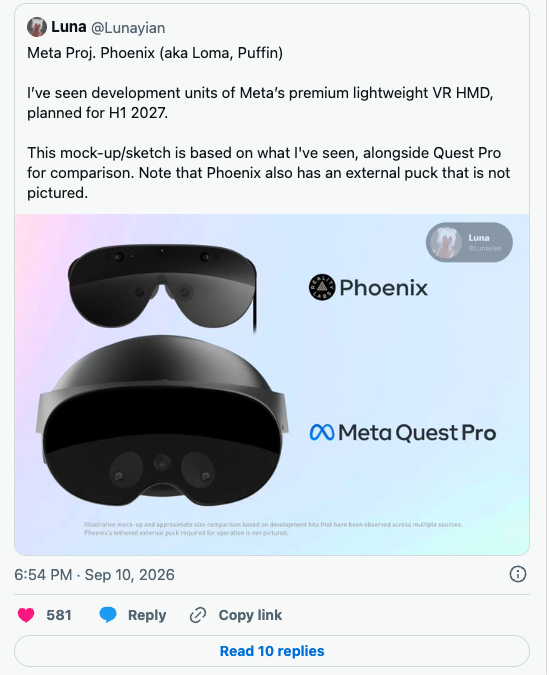
After the success of Meta’s collaboration with Ray Ban glasses, we can see why this appeals to more people. You can wear it like eyewear, and forget it is on.
We hear it time and time again from our customers: today’s headsets aren’t comfortable enough to wear for extended periods of time.
The current Quest 3S weighs in at just over a pound, at 515 grams. That’s not heavy per se, but it’s equivalent to the weight of wearing 6 standard baseball caps at once, on your face.
Rumors indicate that Meta designers had a sub-300 gram goal for the next iteration of the Quest. Yet the new model we’re hearing about may be as light at 110 grams, a substantial change.
Comfort is what separates a tool people use regularly from a gadget people leave in a drawer.
The trick to getting it lightweight
To get that light, Meta reportedly moved the computing portion and battery off your face and into a small tethered box. This is similar to the approach that Apple took with their Vision Pro headset. Except the Vision pro only put the battery in a puck, not the processor too.
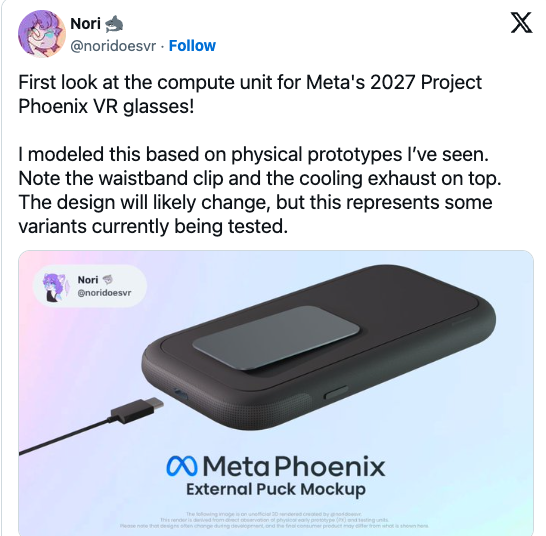
For work use cases we think this makes a lot of sense. Design reviews, coordination meetings, and model walkthroughs are usually done at a desk or in the trailer. You are not moving much, so a tether costs you little. Even if you plan to use the device on the jobsite, you’re not moving around like you do when you’re playing video games. The likelihood the tether to your pockets gets in the way is minimal.
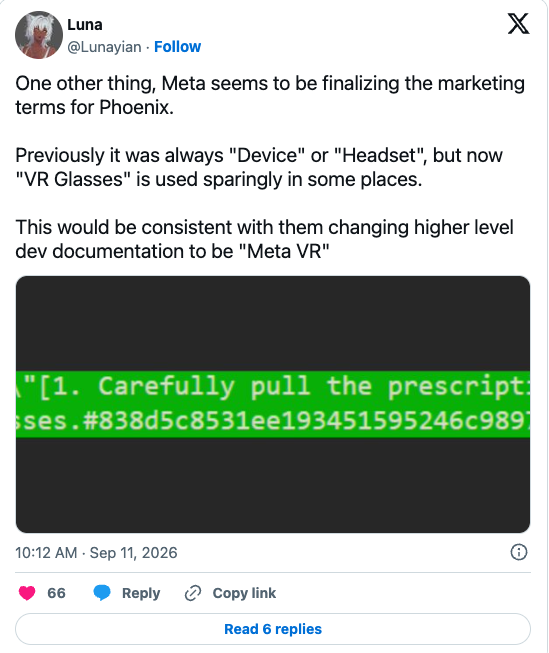
One of the most interesting details people spotted in recent software updates was a language change: Meta has started to add variables referring to “VR glasses” instead of “VR headsets.”
Optics optimized for work
The field of view is reportedly narrower than the Quest 3, closer to the old Rift. On paper that sounds like a downgrade. However, it looks like a deliberate choice to trade width for sharpness, delivering more pixels per degree instead of more peripheral coverage.
For gaming, users may prefer the wide, immersive view. For reading a model, checking a dimension, or verifying a detail, the crisp details make the tradeoff worthwhile. Sharpness beats spread when it comes to precision.
One other detail our team noticed was the lack of light guards on the side of the headset. Again, for gaming this might be seen as a sub-optimal design choice. But if we think of this device as one optimized for use with passthrough environments and work, then being able to see your periphery makes sense.
In some of the stills that were accidentally released in the last firmware update, you can also see cameras on the side and bottom of the device. We can’t wait to see how these are used!
If these images reflect the real device, then it’s clear that Meta is making a lot of design decisions aimed less towards gaming and more towards a device that is more regularly used for work.
Price and timing
The reports point to a target under a thousand dollars. Supply pressure on memory chips could push it higher, so the price could climb.
The rumors are flying as to when exactly this device will be released. And given the images circulating online it feels closer than you might actually think. Tune in to Meta Connect for more details.
What this means for our world
Here is the part that matters for construction: The direction Meta is heading is the direction enterprise XR has needed for years.
Lighter hardware means longer sessions, and those lead to real adoption. A headset comfortable enough to wear through a full review, at a price a firm can buy in quantity, changes who gets to be in the room. That is the shift we have been waiting for.
We built Resolve for this class of device on purpose. Efficient rendering, quality per pixel, cross platform from day one. The hardware moving toward light, comfortable, and productivity first is the hardware moving toward where we envisioned it would go.
So is the Quest 4 coming soon?
We don’t expect to see the Quest 4 you’re picturing out soon. Something lighter and more interesting might come first. We will be watching Connect, and share our thoughts on what we learn.
Until then, treat all of this as what it is. Rumor, gathered by a team that cares where this is going.
It's time to build in months, not years.